
Your team knows its business. This programme helps them say it clearly when a client pushes back, a board interrupts, or the answer is not yet in the room.
For banks, energy firms and commercial teams across Africa. Virtual modules and in-person simulation labs.
*Post-programme feedback, Client Coverage cohort, 2026, eight respondents.


Most client-facing professionals are technically strong. They know the product, the numbers and the market. The trouble starts when the conversation turns: a CFO with ten minutes, a price challenge from a cheaper competitor, a question nobody prepared for.
Under that pressure, capable people fall back on habits that quietly cost them credibility.
None of these are knowledge problems. They are communication habits under pressure, and habits can be changed.
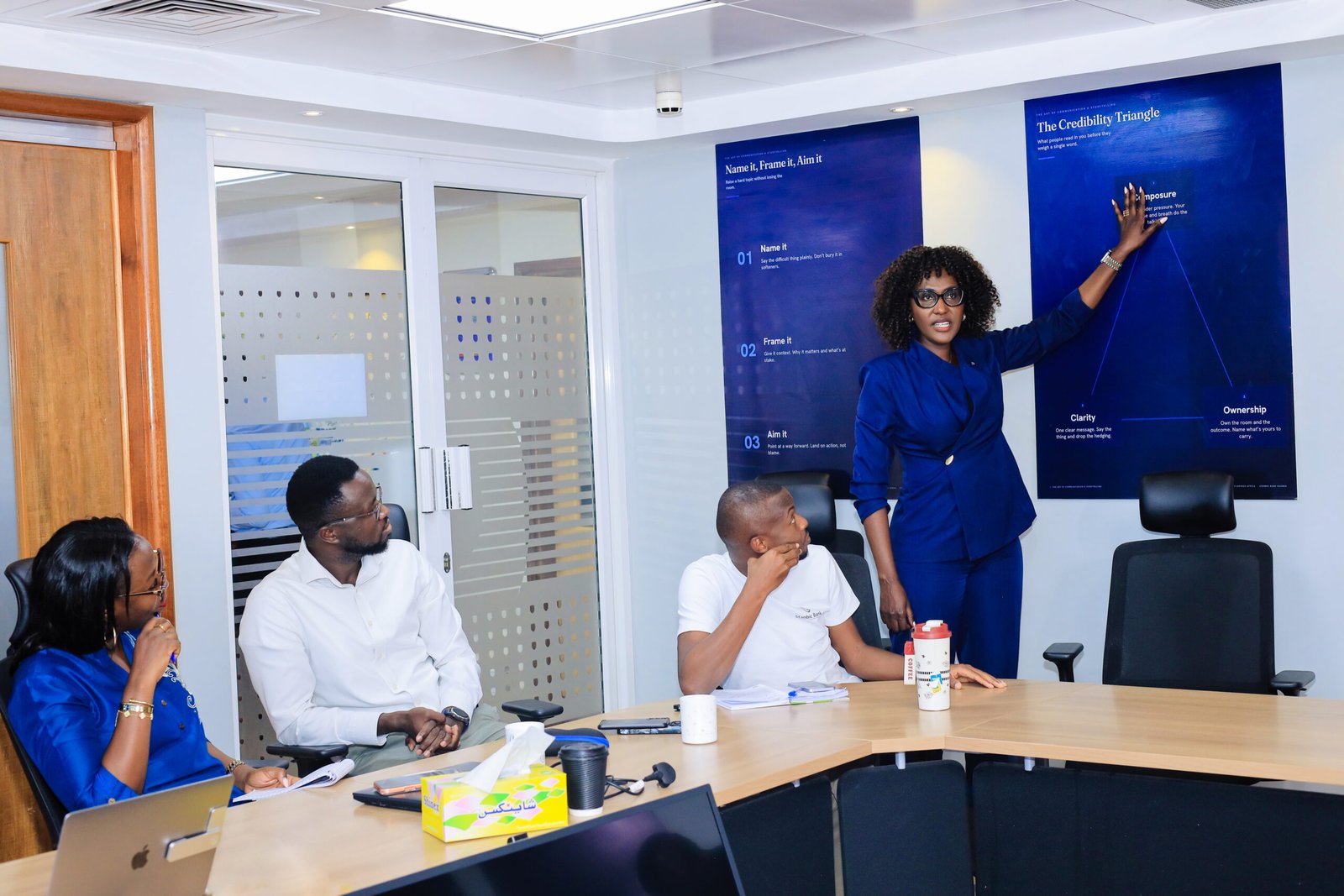
Credibility does not come from having every answer. It comes from staying composed, being clear and taking ownership, especially when the conversation gets difficult.
This programme teaches your team to do that on purpose. They learn a small set of practical frameworks they can use in the moment, then practise them in realistic client scenarios until the new behaviour holds.
who meet CFOs, founders and boards
against incumbents and cheaper challengers
who need to explain complex work simply and persuasively
who want a shared language for feedback after important meetings
stepping into senior stakeholder and boardroom conversations
It is the right fit if you want behaviour change that shows up in client meetings, not a one-off talk that is forgotten by Monday.
These are the shifts we observed in our most recent cohort during live, scored simulation. Together they describe a move from instinct to intention.
A progressive journey from insight, to language, to behaviour.
Interviews with team members and leadership to understand your communication challenges, confidence patterns and pressure triggers. The programme is then designed around what we find.
Four weekly modules build the core concepts, language and frameworks. Storytelling runs through every module.
Participants practise the frameworks in live, realistic client scenarios under pressure, with peer and facilitator feedback.
A 30-day reinforcement clinic plus six months of access to the digital playbook keeps the skills alive in real client work.
Five modules, each built around one core capability and one framework. Each one adds to the last, so by the Lab participants have a complete system for high-stakes conversations.
Understand your pressure triggers and how uncertainty changes the way you communicate. Learn to spot your default reactions and choose a better response.
Structure clear, confident responses while thinking in real time, so time-poor senior stakeholders get the message fast.
Handle challenge, pushback and price pressure without becoming defensive, and hold your position with respect.
Stay credible when the answer is not immediately available, and lead the client towards a clear next step.
A one to two-day, in-person lab where every framework is tested in a live, escalating client mandate. Storytelling comes together here as the final piece.
Simple enough to remember under pressure. Practical enough to use in tomorrow’s meeting.
Every conversation
Composure, Clarity, Ownership: stay steady, lead with one message, close the loop.
Any answer
Say the main message, back it with evidence, name what happens next.
Any friction
Say the hard thing plainly, give useful context, point to a constructive next step.
Any unknown
Confirm what you can, name the gap, commit to a specific next step and time.
Stories that sell value
Story, Need, Answer, Proof: tell the story behind the facts, make the need real, answer the objection before it is raised, prove it with evidence.
Five frameworks for high-stakes conversations, one page each with a worked example.
Most communication training stops at understanding. The Lab is where understanding becomes behaviour.
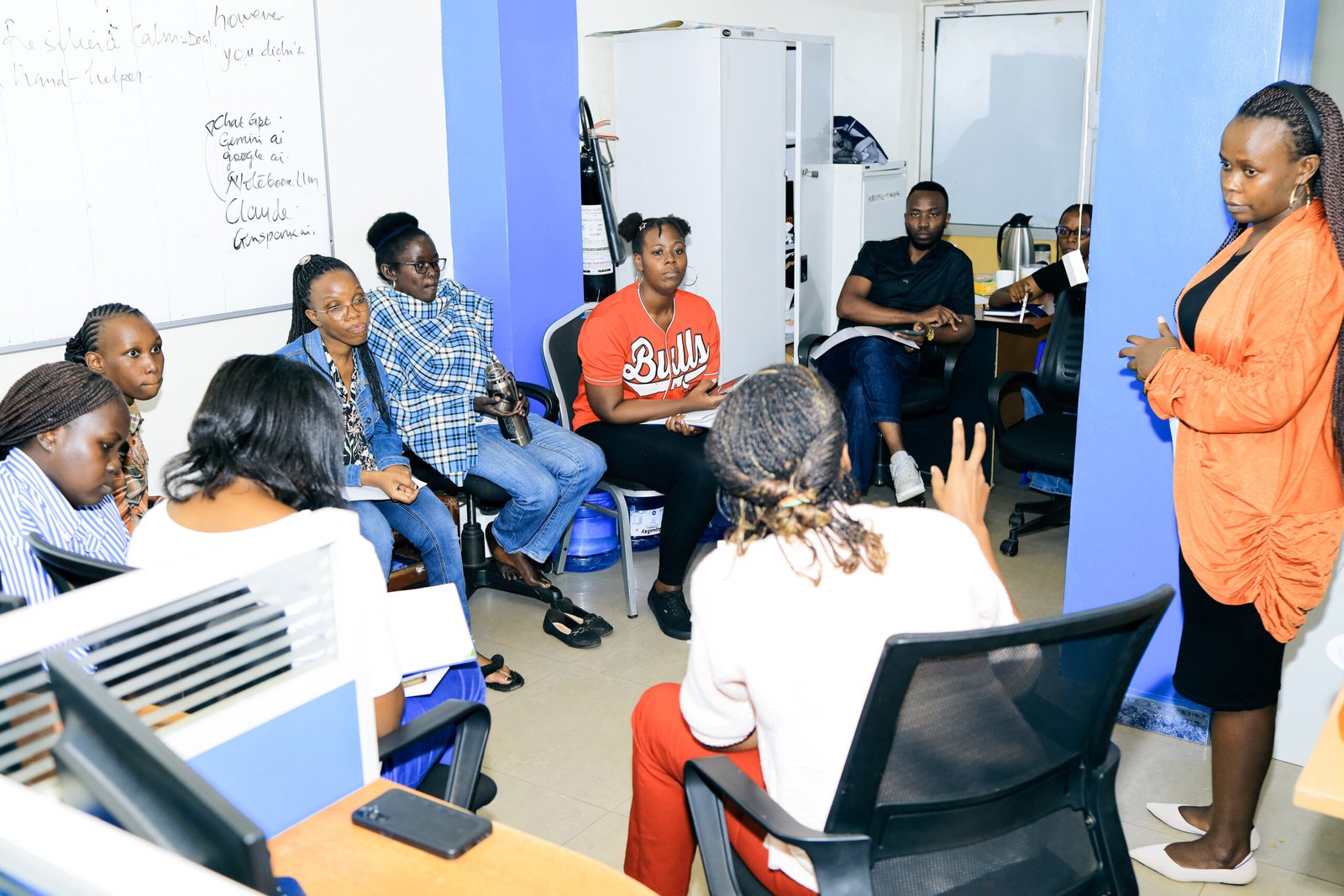
Participants work through a realistic client mandate that escalates across five acts. In our most recent lab, the team pitched to a regional agri-processing business expanding into three new markets, competing against an incumbent bank, a cheaper challenger and the client’s own concerns about price, time, service, trust and execution.
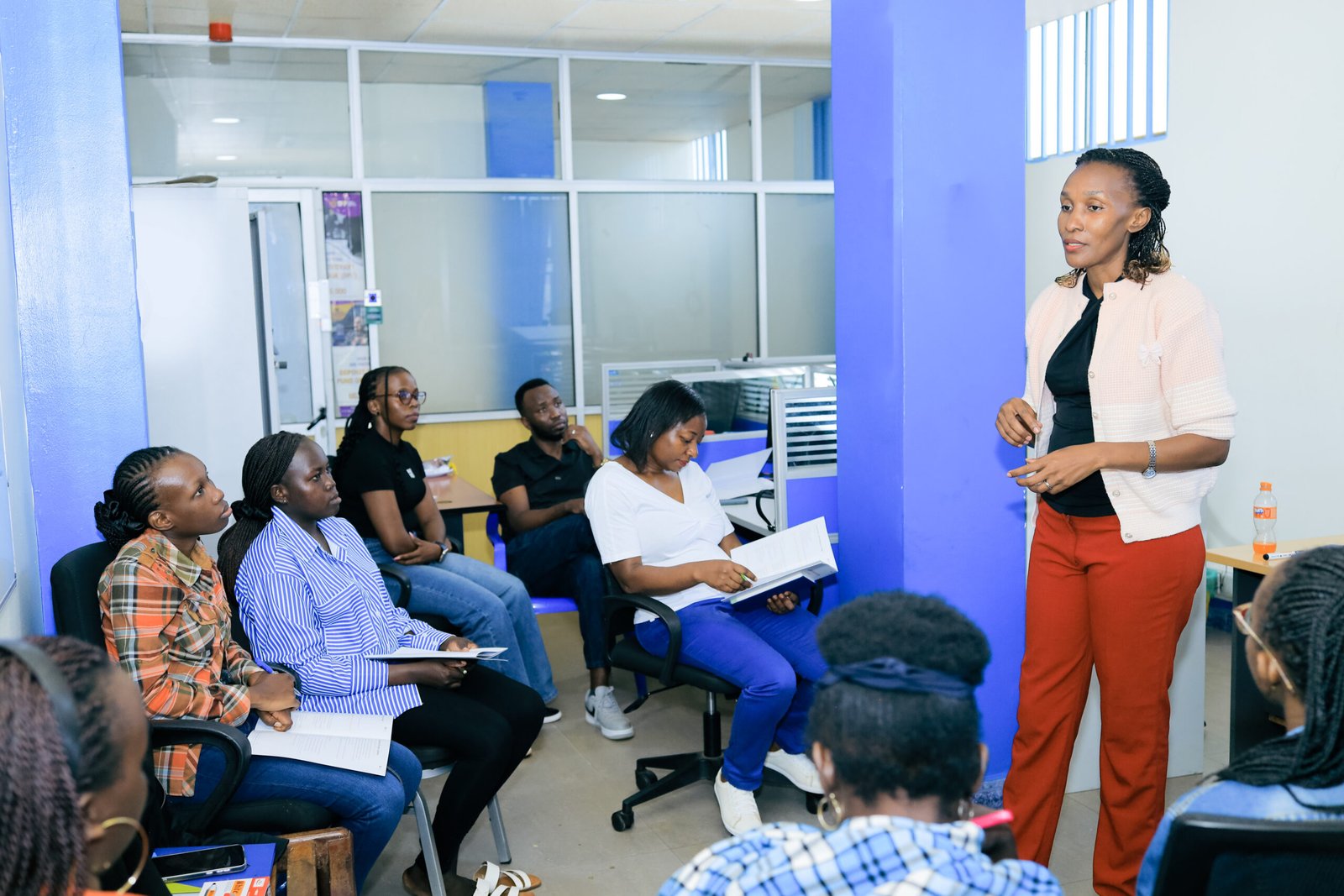
Make the case to a time-pressured CFO.
Respond to pushback on price, trust, delivery and service.
Stay credible without the full answer.
Move the conversation from explanation to commitment.
Show executive presence in front of senior stakeholders.
Participants rotate through three roles, so everyone performs, is challenged and assesses others.
Represents your organisation in the client conversation.
Plays the CFO, founder or board member and applies the pressure.
Scores the performer on composure, clarity and ownership and gives structured feedback.
The environment is safe enough to try and challenging enough to grow. People laugh, reset and go again, and that is when the change happens.
The learning does not end when the session does. Every participant gets a digital playbook to use before real client meetings.
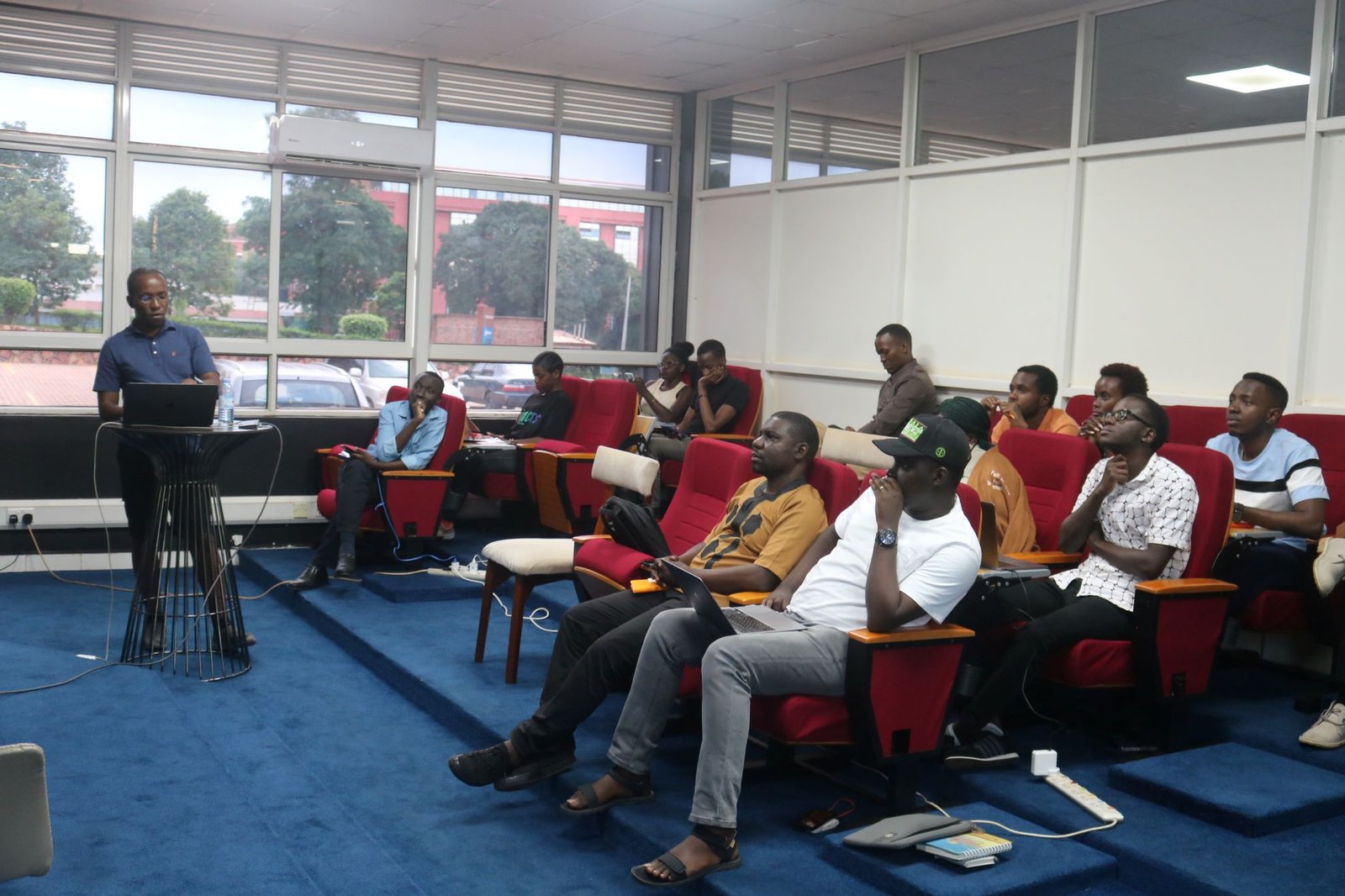


We measure what happens in the room, not just how people felt about it.
Structured observer feedback entries captured in live simulation through the playbook app
The most used framework in the Lab, a strong fit for time-poor senior stakeholders
Source: Phase 3 Immersive Labs report, Client Coverage cohort, August 2026. Post-programme feedback from eight respondents.
“One of the most engaging trainings that facilitated learning and connection for the team.”
Participant, Client Coverage team, Stanbic Bank Uganda
“The Lab gave us a chance to practise.”
Participant, Client Coverage team, Stanbic Bank Uganda
“Seeing how relevant the frameworks were and applicable to real life work situations.”
Participant, answering “What did you value most?”, Client Coverage team, Stanbic Bank Uganda
Originally scoped as presentation skills training.
Interviews with 14 team members and two executive leadership consultations showed a confidence gap under uncertainty, not a skills gap. The programme was redesigned as executive communication for influence.
Discovery report and programme design; four virtual modules; an in-person Immersive Simulation Lab; the digital playbook app; reinforcement sessions after the Lab.
Every respondent rated the training excellent and had already applied what they learned. Observers captured 26 scored entries, giving the team a measurable baseline on composure, clarity and ownership and a shared language for improving it.

Seanice Kacungira has spent over two decades in high-stakes communication. She is the founder and principal of Blu Flamingo Africa, a pan-African strategic marketing and communications agency headquartered in Johannesburg with offices across East Africa.
She has pitched at government, international and executive level, including at Goldman Sachs and Stanford. She trained through Stanford Seed and Kellogg and is a certified NeuroCoach.
Seanice personally designs and delivers every session. Participants learn from someone who pitches for a living, not from a slide deck.
Choose the format that fits where your team is today.
| Most complete Full Programme |
Immersive Lab | Virtual Journey | |
|---|---|---|---|
| Best for | Lasting behaviour change across a whole team | A high-impact intervention before a key pitch or season, or teams with existing foundations | Distributed teams building the core frameworks |
| Discovery interviews | Yes | Short briefing | Yes |
| Four virtual modules | Yes | No | Yes |
| In-person Simulation Lab | Yes | Yes | No |
| Playbook app (6 months) | Yes | Yes | Yes |
| 30-day reinforcement clinic | Yes | Add-on | Add-on |
| Cohort size | 10 to 20 participants | 10 to 20 participants | 10 to 20 participants |
| Investment | Request a proposal | Request a proposal | Request a proposal |
| Book a discovery call | Book a discovery call | Book a discovery call |
A one-hour conversation about your team, your clients and what is at stake.
For full programmes, we interview team members and leadership to find the real pressure points.
Format, scenarios, timeline and investment, designed around what we find.
Virtual modules, the Lab and reinforcement, with scored evidence of progress.
Client-facing and commercial teams who meet senior clients and stakeholders: relationship managers, client coverage and sales teams, specialists who need to explain complex work simply, and the managers who lead them. It works best for teams with strong technical knowledge who want that knowledge to land under pressure.
Presentation training focuses on delivering prepared content. This programme focuses on the unscripted moments that decide outcomes: the CFO who interrupts, the price challenge, the question nobody prepared for. Participants learn to stay composed, lead with one clear message and close with ownership, then practise it in live simulation.
Both. The four core modules run as 90-minute virtual sessions, so distributed teams can join from anywhere. The Immersive Simulation Lab runs in person, because pressure is easiest to practise in the room.
A full programme runs as a discovery phase, four weekly 90-minute virtual modules and a one to two-day in-person lab, followed by reinforcement. Participants keep access to the digital playbook for up to six months after the lab.
Yes. Every full programme starts with discovery interviews with team members and leadership, so the scenarios, examples and pressure points reflect your clients, your competitors and your culture.
During the lab, trained peer observers score every performer on composure, clarity and ownership through the playbook app. This gives your organisation a measurable baseline and a shared language for improvement. We also collect structured post-programme feedback from participants.
Use Known, Unknown, Next. Say what you can confirm now, name what you still need to verify, and commit to a specific next step with a time. For example: “What I can confirm now is X. What I need to verify is Y. I will come back to you by 3pm with the confirmed position.” Not knowing does not cost credibility. Guessing does.
Participants keep the playbook app for up to six months, including their pressure profile, holding lines and meeting preparation tools. Reinforcement options include a 30-day reinforcement clinic, a story bank workshop and a shared holding line library for your team.
Each cohort has a minimum of 10 and a maximum of 20 participants, which keeps practice personal and feedback specific. Lab practice runs in groups of three, so every participant performs, plays the client and observes. For larger teams, ask us about running more than one cohort.
Investment depends on cohort size, format and location, so every programme is quoted individually. Book a discovery call and we will send a tailored proposal with the right format for your team.
Your clients will keep asking difficult questions. Your competitors will keep cutting prices. The question is whether your team meets those moments with composure, clarity and ownership.
Tell us about your team and we will recommend the right format.
A one-hour conversation about your team. No obligation.